The Enneagram backstage
Field notes from an exploration of the Enneagram and Performance Management

We had an unexpectedly fun and expectedly interesting Wisdom of the Enneagram (second Tuesday of every month) free learning session about the Enneagram and Performance Management yesterday.
These are some field notes. Scroll down all the way to the end if you want to watch the recording on YouTube.
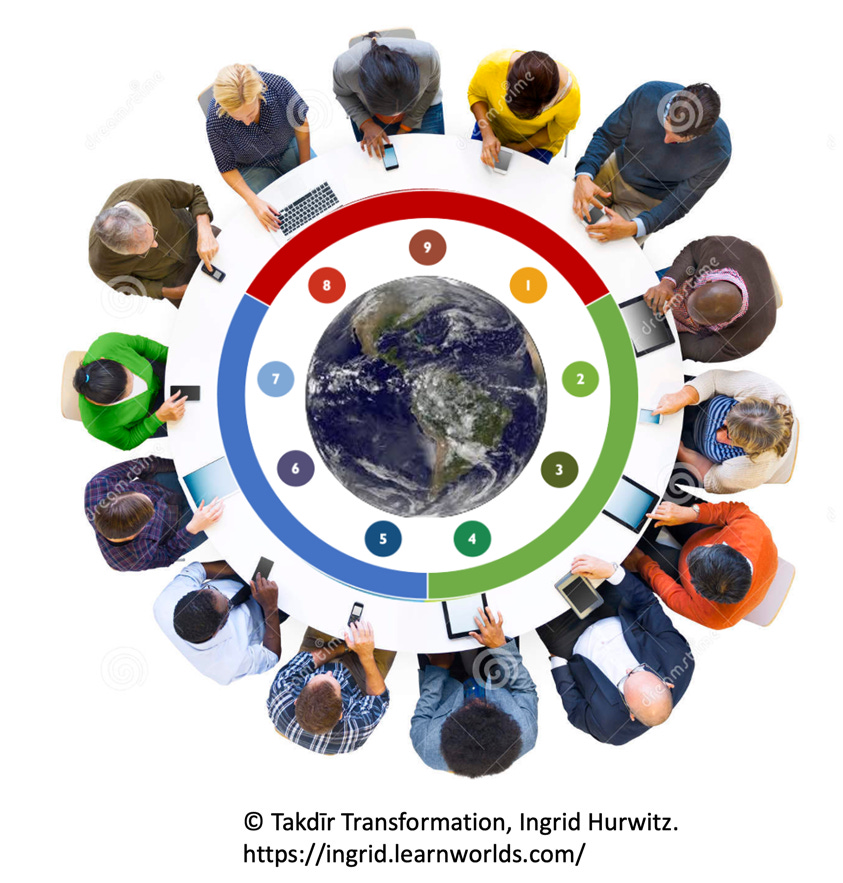
One participant accidentally said “performance anxiety” every time she tried to say “performance management”, which I feel was her body telling the truth about our human experience.
All of us have seen it done in ways that are alienating, encourage self-alienation, and tempt us away from authentic power and presence and connection, into masking, and into identification with the mask.
Btw, “Identification” is the Ennea-type Three Defense mechanism, for those who know the Enneagram, and the E3 archetype is all about self-deception in the interests of being seen as successful and valuable. There is nothing like big organisations in a capitalist society to trigger the need to prove oneself in accordance with collectively defined external measures of value.
We need to learn to navigate the relationship and inevitable frictions between contextual awareness, authenticity, care, shame, our ego idea and a deep dedication to things of ultimate intrinsic value: truth, beauty, love and goodness.
There’s no life-hack one-and-done formula (the Enneagram doesn’t give us one, no shortcuts. We have to live in the problem. “The cure for the pain is the pain”, said Rumi.
We spoke about identity, survival strategies, and what it might look like if we didnt play along with what Mats Alvesson calls “Functional stupidity” (see previous article), and the automaticity of “organisational reflexes” (jargon, cliches, thoughtless, meaningless rituals..). Bi-annual performance cycles with portfolios of evidence and Nine-box talent reviews, and Competency frameworks, done formulaically and as ends in themselves, might be examples.
It all depends on how they are done.
The difference is in the how and the quality of consciousness we bring to what we do. Reflexivity is the thing. Awareness.
In the case of Performance Management it would be bringing in meta-cognitive, interoceptive and feeling awareness of the deeper intention of Performance Management as a conversational process of alignment.
With awareness, it is not a transactional exchange with “KPIs” as content. In attuned relationship the metrics and the content are words used to find each other and test our mutual understanding within a medium of cameraderie, solidarity, and shared MEANING-making.
This quality naturally suffuses spaces and conversations when we are truly present and awake.
What if we have performance management conversations together, consciously, in a team space that is slowed down, where all of the Type’s perspectives and concerns are brought in. R
Can we sit together and welcome ALL of the questions, and take the time to be with them, mindfully, thoughtfully, in Head, Heart and Gut?
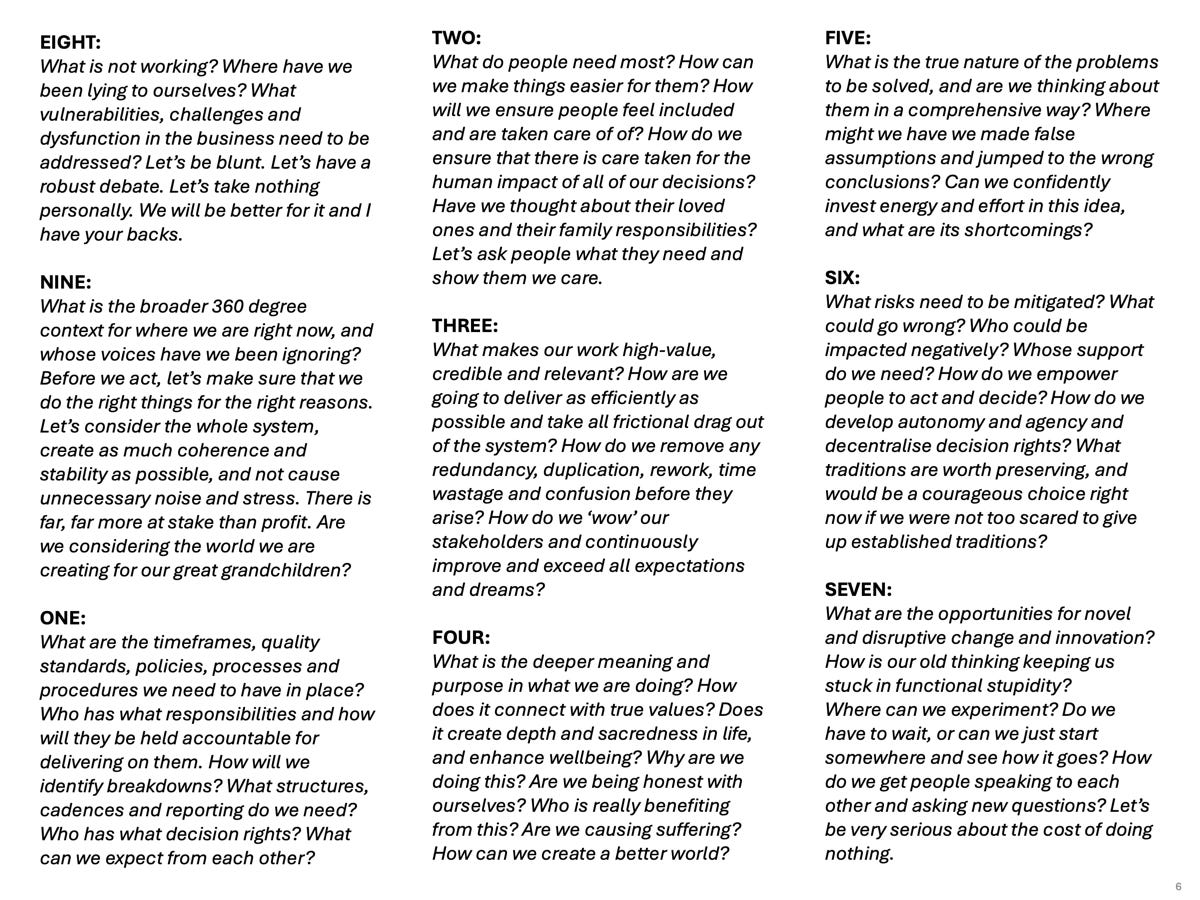
What are the enemies of Presence and awareness?
We all know it is speed, rushing, not being here and now. Why? Pressure. And why does pressure do this to us? It triggers our
Fear (Head centre)
Shame (Heart centre)
Rage (the Gut concern with the threat of human dignity and autonomy being harmed).
These inevitably lead us into the cul-de-sac of the fake ego ideal and help us wake up. When we get to know our Reality Strategies well, we begin to be able to embrace more, share more, be more honest, have better quality conversations, and find each other. Self-knowledge gives rise to everything else, says an Amharic proverb.
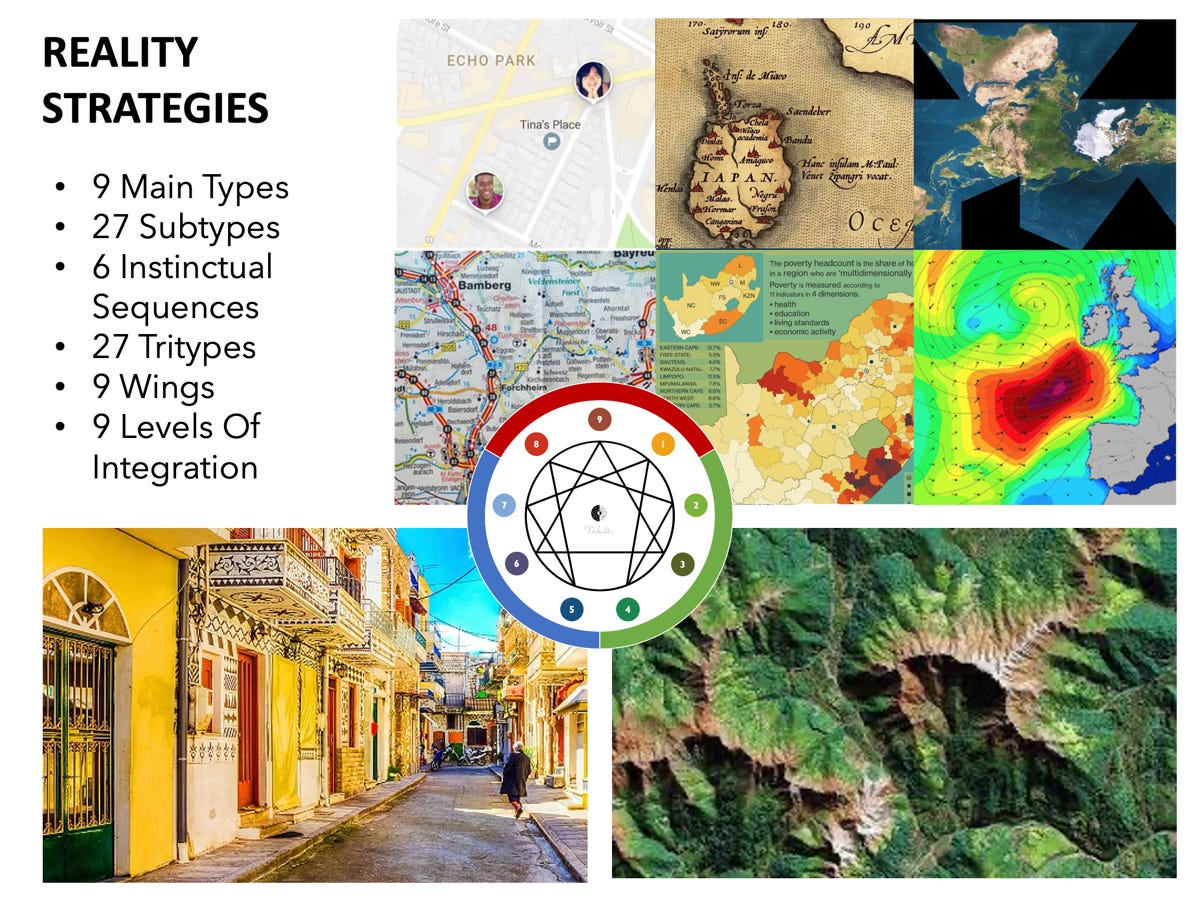
The Amharic proverb speaks to the truth that our internal landscape dictates our external reality.
In Ethiopian wisdom, understanding one’s own character, limitations, and virtues is the necessary ground in which all other forms of intelligence emerge.
Without a clear mirror held up to the self, any external knowledge is based on a distorted and VERY partial map of the world. Before one can accomplish something of true relevance, truth and goodness, one must first master the geography of their own mind and spirit to fill in the gaps in awareness.
“What am I not seeing?” , or more comprehensively, “what veils my awareness?”
The question that is the great gift of the Enneagram. The Enneagram maps it out in fine detail.
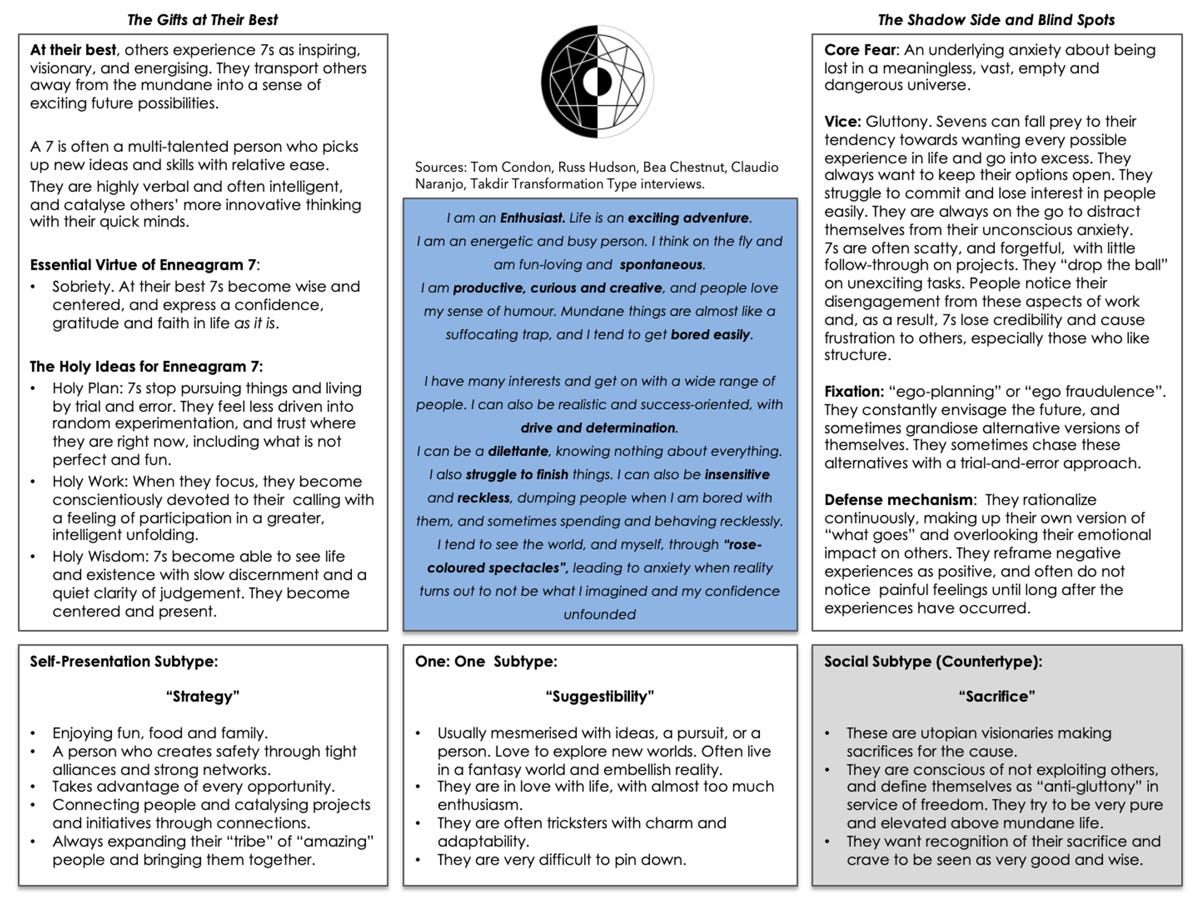
Consider the SEVEN. Read this closely and you will possibly be able to recognise the wonderful qualities of a healthy Seven in your life, as well as imagine and/or foresee all of the Performance management implications and /or hazards. You might at some point have experienced the Seven impatience, fury, disconnection from reality, lack of follow-through, heedlessness, selfishness, emotional disconnection, and at worst, exploitative narcissism. You may recognise a previous unhealthy Seven boss or colleague and realise, “omg, no wonder they were a terrible boss”. If you are not a Seven, don’t judge. We are all as bad and as good. We are all the same. There are nine slides like this and none of them are not dual-natured. Vice and Virtue. Fixation and Holy Idea.
Self-awareness
I used Heading 1 size. That huge. We need to understand that this question of self-awareness is a deep and ancient concern that is core to who and what we are in every moment. It can’t be left out of Performance Management, or anything else.
It is not meta-cognition, it is not superego. What is it..?
Some considerations about self-knowledge
The concept of self-knowing as a key is as ancient as human consciousness of being conscious. What am I? What does it mean to exist?
I learned this from my friend and collaborator Robert Hutchinson, a wonderful fellow-teacher and coach: This universal pursuit of inner clarity and self-knowing at the deepest level is BEST exemplified by the ancient Egyptian declaration, “I know myself in my heart.” STOP and feel that, please. In Egyptian cosmology, the heart (Ib) was the ultimate seat of intelligence, emotion, and moral judgment, weighed against the feather of truth (Ma’at) after dying. The Egyptians saw inner heart-knowing as the absolute basis for conscious ethical action.
To know one’s heart is to feel, sense, explore, observe, monitor, recognize and be honest with oneself about one’s own intentions, motives, shadows
To know oneself in one’s heart is to sense and know one’s relationship to the unity of being, to the eternal, and to love itself, making it impossible to act blindly or maliciously.
When we know ourselves in our heart action from the motives of the lower self (Vice and Fixations) causes internal dissonance in addition to external suffering and negative consequences to others.
True self-awareness strips away egoic illusions, ensuring that our actions in the world are grounded in empathy, justice, and a profound interconnectedness with all of life.
In the modern pursuit of this ancient wisdom, systems like the Enneagram are a key, unlocking the subconscious patterns of our personality to reveal the authentic, self-aware essence beneath, our groundedness in the self-subsisting unity of the Ground of Being. The Enneagram is a mirror and a map for gradually coming to awareness of our true being, our Ruh, in Sufism, as a subtle and vast reflection and emanation of the eternal and ever-living.
Let’s start having different kinds of Performance Management conversations?
IEA-Accredited Advanced Enneagram application training
If you want to work with the deepest dimensions of the Enneagram in your application context, whether as a therapist, marriage counsellor, coach, pastor, or corporate OD facilitator, have a look at my upcoming courses.
Starts JUNE 18th one year programme:
IEA Full Certificate in 5D® Trauma-informed Enneagram Coaching: https://ingrid.learnworlds.com/course/5d-all
8th AUGUST 8 weeks:
50% discount for 5D® students and alumni: Team Dynamics: Team Effectiveness facilitation: https://ingrid.learnworlds.com/course/team-dynamics
My Enneagram work brings together the Cognitive Science of Wisdom, the Neuroscience of Trauma, and Wisdom Traditions (Indigenous pre-colonial spirituality, Christian mysticism, Sufism, Buddhism). I have a transdisciplinary Ph.D concerned with “The Enneagram and the Cultivation of the Inner Observer” (publication pending, University of Johannesburg, 2026).
Book a 30 min Enneagram growth path chat with me here:
https://calendly.com/takdir-ingrid-hurwitz/30min
I look forward to seeing you in future free learning sessions, and maybe on an advanced Enneagram programme! I also coach (including teams, leaders, and and 1:1 relationships).
🪷
“I am grateful for this new day.
I embrace impermanence.
I cultivate compassion for myself and others.
I walk the path of Wisdom.
I am at peace with myself.”
🪷
Love,
Ingrid